
ขณะนี้บทความนี้มีให้บริการเป็นภาษาอังกฤษ
Techniques
Muaythai eight limbs explained: fists, elbows, knees, and kicks
Why muaythai is called the Art of Eight Limbs, which range each weapon covers, and what a beginner class actually teaches.
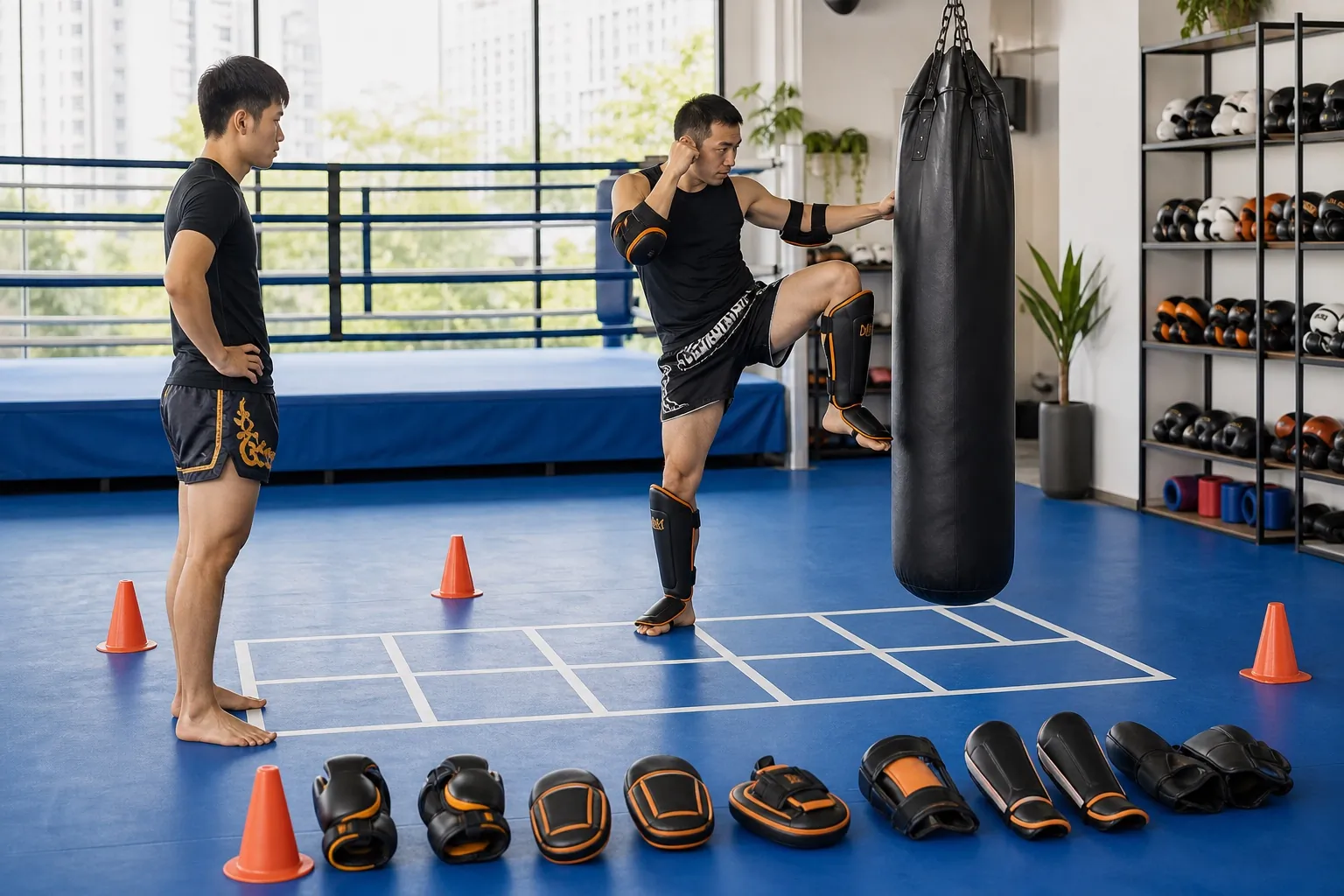
Muaythai eight limbs is the reason the sport looks different from boxing. Boxing uses two fists. Muaythai adds elbows, knees, and shins: left and right of each, eight weapons. That is why it can work at close, mid, and long range, and why a fight card feels unlike boxing.
ประเด็นสำคัญ
- Eight limbs = left and right fists, elbows, knees, and legs, covering close, mid, and long range.
- Beginner classes usually teach jab, cross, hook, and uppercut.
- Elbows and knees are the close-range signature. First Punch classes stay on pads and do not spar.
- Travelers meet teep and low kick first. High kicks are optional.
- For one experience class, remember guard, jab-cross, teep, and low kick.
1. What “eight limbs” means
A beginner class will not teach all eight. When a coach fixes your low kick or teep, they are teaching you to fight with the whole body, not only the hands.
2. The four punches
Bangkok beginner classes usually start here:
- Jab: lead-hand probe, range finder, and setup
- Cross: rear-hand power shot, often paired with a low kick
- Hook: mid-range strike to the head or body
- Uppercut: close-range shot from below against a crouched opponent
3. Elbows — the close-range signature
Elbows are muaythai’s most damaging close weapon: horizontal, upward, and spinning variations. Beginner classes do not teach sparring elbows. Shadow or pad demos exist so you know the ring has another layer.
At a Rajadamnern card, watch elbows inside the clinch. That is the most dramatic split from other striking sports.
4. Knees and clinch
Knees work at mid-close range and pair with clinch control. Fighters fight for the neck and drive knees to the body or head. A beginner class may show a neck-hold knee drill. First Punch pad work does not become clinch fighting.
5. Kicks travelers actually learn
A short experience class usually includes:
- Teep (push kick): a foot-jab that holds range and breaks an attack
- Low kick: a shin kick to the thigh, the classic scoring and damage tool
- Body kick: a mid kick to the ribs that needs hip turn and balance
- High kick: a head kick. Advanced. Not required in a first class
6. What to remember from one class
If you only take one First Punch class, keep: guard, jab-cross, teep, and the hip turn on a low kick. That set already covers two fists and one leg — enough to say you learned muaythai.
For names and use, continue with basic techniques. Before you book, read the first-class flow.
คำถามที่พบบ่อย
Will one class cover all eight limbs?
No. Beginner classes focus on punches and basic kicks. Elbows and knees are usually demonstrated, not sparred.
Will we clinch?
A standard First Punch beginner class stays on pads. You may see a neck-hold knee drill. You will not wrestle in clinch.
Where do I learn the names?
Read muaythai basic techniques for beginners, then let the coach correct the live movement.
บทความที่เกี่ยวข้อง
Techniques
Muaythai basic techniques for beginners: stance, punches, and kicks
Stance, the four punches, teep, and low kick — a beginner vocabulary before a Bangkok first class.
Beginner
What happens in your first muaythai class in Bangkok?
Walk through a first-time muaythai class in Bangkok: check-in, wraps, warm-up, pad work, and what a beginner session will not do.
Muaythai basics
Muaythai history and origins: from battlefield craft to national sport
Where muaythai comes from: Siamese soldiers, Ayutthaya, and the modern Rajadamnern ring.
Techniques
Muaythai vs boxing in Bangkok: which class tonight
Boxing uses two points of contact. Muaythai uses eight. Book the Thai class tonight. Link the live eight-limbs and basic-techniques guides; do not reprint them.